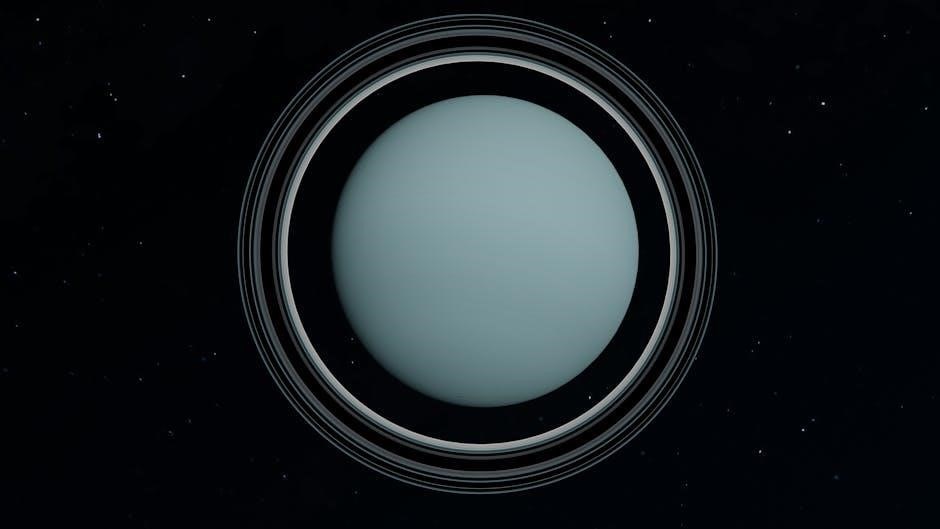
Astronomy, an ancient science and vital cultural branch, invites beginners to explore the universe’s wonders. From initial sky observations to modern tools, it’s a captivating journey!
What is Astronomy?
Astronomy is the scientific study of celestial objects – stars, planets, comets, and galaxies – and the physical universe as a whole. It’s a remarkably ancient science, deeply interwoven with human culture since the earliest civilizations began observing the skies. Initially, these observations were often tied to mythology and calendars, but over time, astronomy evolved into a rigorous discipline employing the scientific method.
Today, astronomy encompasses a broad range of fields, from theoretical astrophysics, which seeks to understand the fundamental laws governing the universe, to observational astronomy, which focuses on collecting and analyzing data from telescopes. It’s a field that constantly pushes the boundaries of our knowledge, challenging our understanding of space, time, and our place within the cosmos.
For beginners, astronomy offers a unique opportunity to connect with the vastness and beauty of the universe, fostering a sense of wonder and inspiring curiosity about the world around us. It’s a journey of discovery that can be enjoyed by anyone, regardless of their background or experience.
The Historical Roots of Astronomy
Astronomy’s origins are deeply rooted in antiquity, stretching back to prehistoric cultures who meticulously observed the skies. Early civilizations – Babylonian, Egyptian, Greek, and Chinese – developed sophisticated systems for tracking celestial movements, initially for practical purposes like agriculture and calendar creation. These observations were often intertwined with religious beliefs and mythology, attributing divine significance to celestial bodies.
The Greeks, particularly, made significant strides in developing geometrical models to explain planetary motion. Figures like Ptolemy proposed a geocentric (Earth-centered) model that dominated astronomical thought for over 1400 years. However, this model eventually gave way to the heliocentric (Sun-centered) model championed by Copernicus, Galileo, and Kepler, marking a pivotal shift in our understanding of the cosmos.
Throughout history, advancements in technology – from the invention of the telescope to the development of space-based observatories – have continually revolutionized our ability to explore and understand the universe, building upon the foundations laid by these early astronomers.
Why Study Astronomy?
Studying astronomy offers a unique perspective on our place in the vast universe, fostering a sense of wonder and inspiring curiosity about the cosmos. It’s not merely about memorizing facts about stars and planets; it’s about understanding the fundamental laws of physics that govern everything around us.
Astronomy drives technological innovation. The demands of astronomical observation have spurred advancements in optics, imaging, computing, and data analysis – technologies that have widespread applications in other fields. Furthermore, it encourages critical thinking, problem-solving skills, and a scientific approach to understanding the world.
Beyond the practical benefits, astronomy addresses profound philosophical questions about the origin, evolution, and ultimate fate of the universe, and potentially, life itself. It connects us to something larger than ourselves, offering a humbling and awe-inspiring perspective.
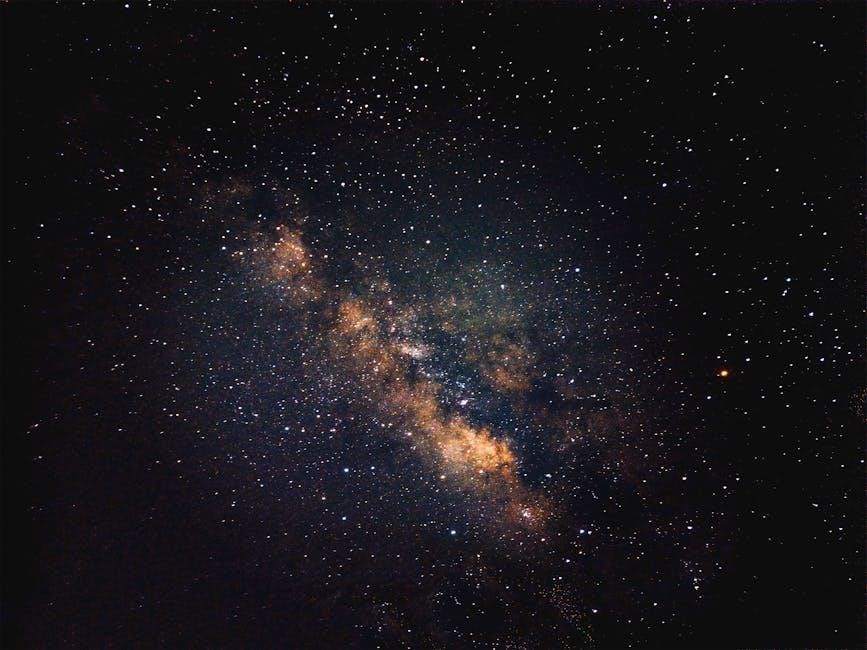
Understanding the Night Sky
Explore constellations, star brightness using the magnitude scale, and learn to navigate the celestial sphere – unlocking the secrets hidden within the night’s darkness.
Constellations and Star Patterns
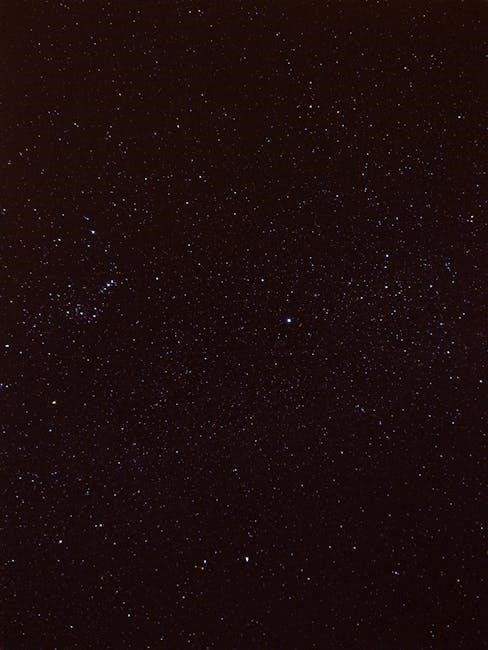
Constellations are recognizable patterns formed by stars in the night sky, historically used for navigation and storytelling. These aren’t physically related groups; stars appear close from our perspective on Earth, but can be vastly distant. Ancient cultures assigned myths and legends to these patterns, creating a rich tapestry of astronomical folklore.
Common constellations include Ursa Major (the Great Bear), Orion (the Hunter), and Cassiopeia. Learning to identify these patterns is a fantastic starting point for navigating the night sky. Star-hopping – using known constellations to locate fainter stars or other celestial objects – is a valuable skill for beginner astronomers.
Remember that the appearance of constellations changes with latitude and time of year as Earth orbits the Sun. Observing different constellations throughout the seasons reveals the dynamic nature of the cosmos and provides a deeper appreciation for our place within it. Numerous apps and star charts can aid in constellation identification.
Brightness of Stars: Magnitude Scale
Star brightness isn’t absolute; it depends on both how much light a star emits and its distance from Earth. The magnitude scale provides a standardized way to measure this apparent brightness. Developed by the ancient Greek astronomer Hipparchus, it’s a bit counterintuitive: brighter stars have lower magnitude numbers.
The brightest stars have magnitudes close to 1 or even 0 (like Sirius at -1.46), while fainter stars have larger magnitudes. The naked eye can typically see stars up to magnitude 6 under ideal conditions. Each step in magnitude represents a change in brightness of about 2.5 times.
Astronomers also use absolute magnitude, which measures a star’s intrinsic brightness at a standard distance. Understanding magnitude allows for comparing the relative brightness of stars and appreciating the vast range of luminosity in the universe. It’s a fundamental concept for any aspiring astronomer.
Navigating the Celestial Sphere
Navigating the night sky requires understanding the celestial sphere – an imaginary sphere surrounding Earth, onto which stars appear projected. While stars are at vastly different distances, we perceive them as lying on this sphere. Key reference points help locate objects.
The celestial poles are extensions of Earth’s rotational axis into space. Declination, measured in degrees, is a star’s angular distance north or south of the celestial equator (analogous to latitude on Earth). Right ascension, measured in hours, minutes, and seconds, is its east-west position (like longitude).
Star charts and astronomy apps utilize these coordinates. Learning to identify prominent constellations serves as landmarks. With practice, you can pinpoint specific stars and deep-sky objects, unlocking the secrets of the cosmos and enjoying the beauty of the universe above.

Our Solar System
Our solar system, centered on the Sun, includes planets, moons, asteroids, and comets. It’s a fascinating realm to explore, offering insights into planetary formation and evolution.
The Sun: Our Star
The Sun, a G-type main-sequence star, is the heart of our solar system, providing light and warmth essential for life on Earth. It’s a massive, glowing sphere of hot gas – primarily hydrogen and helium – undergoing nuclear fusion in its core. This process releases tremendous energy, radiating outwards as electromagnetic radiation.
Understanding the Sun’s structure is key to grasping its influence. Layers include the core, radiative zone, convective zone, photosphere (the visible surface), chromosphere, and corona (the outermost layer). Sunspots, cooler areas on the photosphere, are linked to magnetic activity. Solar flares and coronal mass ejections are powerful eruptions that can impact Earth’s space weather.
Studying the Sun helps us understand other stars and the processes that govern stellar evolution. It’s a dynamic and complex object, constantly changing and influencing the entire solar system. Observing the Sun safely, using proper filters, is a rewarding experience for any astronomy enthusiast.
Planets: An Overview
Our solar system boasts eight recognized planets, categorized into inner, rocky planets and outer, gas giants. The inner planets – Mercury, Venus, Earth, and Mars – are smaller and denser, with solid surfaces. Mercury is closest to the Sun, experiencing extreme temperature variations. Venus, shrouded in a thick atmosphere, is incredibly hot and volcanic.
Earth, uniquely, supports life, possessing liquid water and a breathable atmosphere. Mars, the “Red Planet,” shows evidence of past water and is a prime target for exploration. The outer planets – Jupiter, Saturn, Uranus, and Neptune – are massive and primarily composed of gases like hydrogen and helium.
Jupiter, the largest, features a prominent Great Red Spot, a centuries-old storm. Saturn is renowned for its spectacular ring system. Uranus and Neptune are ice giants, colder and farther from the Sun. Each planet offers a unique window into the formation and evolution of our solar system.
Moons, Asteroids, and Comets
Beyond planets, our solar system teems with smaller celestial bodies; Moons, natural satellites orbiting planets, exhibit diverse characteristics. Some, like Earth’s Moon, are rocky and heavily cratered, while others, like Jupiter’s Europa, harbor subsurface oceans – potential habitats for life.
Asteroids, rocky remnants from the solar system’s formation, primarily reside in the asteroid belt between Mars and Jupiter. They vary in size, from a few meters to hundreds of kilometers across. Comets, icy bodies originating from the outer solar system, develop glowing tails as they approach the Sun, due to sublimation.
These “dirty snowballs” offer clues about the early solar system’s composition. Occasionally, asteroids and comets cross Earth’s orbit, posing potential impact hazards. Studying these objects provides insights into the solar system’s history and the processes that shaped it.
Tools for Observation
Beginners can start with naked-eye observations, progressing to binoculars for enhanced views. Telescopes, available in various types, unlock deeper exploration of celestial objects.
Naked-Eye Astronomy
Embarking on your astronomical journey doesn’t require expensive equipment! Naked-eye astronomy, observing the cosmos with just your vision, is a fantastic starting point. It’s how our ancestors first connected with the universe, and it remains a rewarding experience today. Begin by finding a location away from city lights – light pollution significantly hinders visibility.
Familiarize yourself with constellations, recognizable patterns of stars. These act as landmarks in the night sky, helping you locate other celestial objects. Learn to identify bright stars like Sirius, Vega, and Betelgeuse. Observe the phases of the Moon, tracking its changes over the lunar cycle.
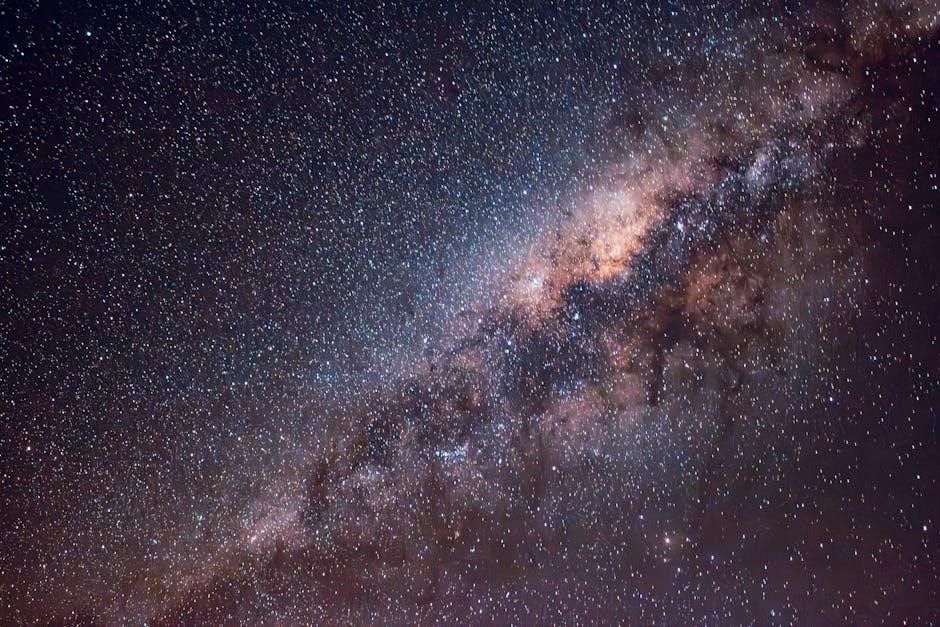
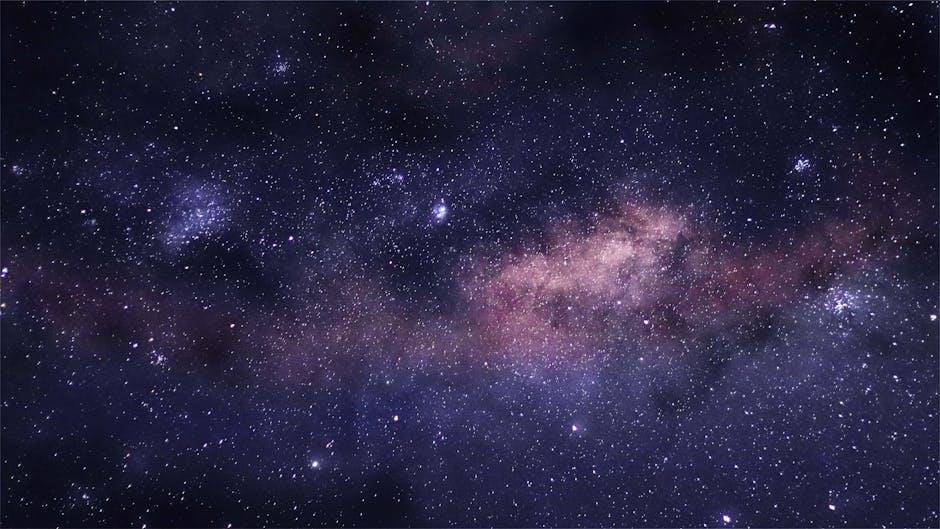
Look for meteor showers, spectacular displays of shooting stars, occurring when Earth passes through debris trails left by comets. Patience is key! Allow your eyes to adjust to the darkness for at least 20-30 minutes to maximize your ability to see faint objects. Observing the Milky Way, our galaxy’s band of light, is a breathtaking sight from dark locations. It’s a truly humbling experience, connecting you to the vastness of space.
Binoculars for Beginners
Stepping up from naked-eye observing, binoculars offer a significant enhancement to your astronomical experience. They gather more light, revealing fainter objects and greater detail than visible with the unaided eye. A good starting point is a pair with 7×50 or 10×50 specifications – the first number indicates magnification, the second, the objective lens diameter in millimeters.
Larger objective lenses gather more light, crucial for observing dim celestial targets. Look for binoculars with coated lenses to minimize light loss and maximize image brightness. A tripod is highly recommended, as even slight hand tremors can blur the view at higher magnifications.
Binoculars excel at observing the Moon’s craters, Jupiter’s moons, and star clusters like the Pleiades. They also broaden your view of the Milky Way, revealing more stars and nebulae. Illustrated step-by-step instructions are available to help you set up and use binoculars effectively, making your exploration of the night sky even more rewarding and accessible.
Telescopes: Types and Choosing One
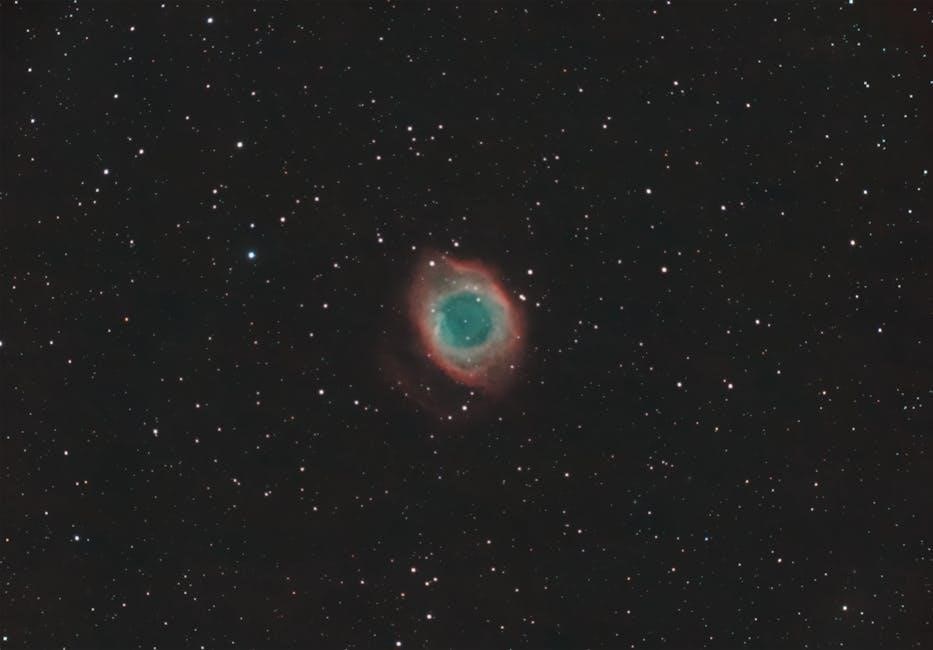
For deeper exploration, a telescope is the next logical step. Several types cater to different observing preferences and budgets. Refractor telescopes use lenses to gather light, offering sharp, high-contrast images, ideal for planetary observation. Reflector telescopes utilize mirrors, providing larger apertures for observing faint deep-sky objects like galaxies and nebulae at a lower cost.
Catadioptric telescopes, like Schmidt-Cassegrains, combine lenses and mirrors, offering a compact design and versatile performance. When choosing, consider aperture (light-gathering ability), focal length (magnification potential), and mount stability.
A sturdy mount is crucial for steady viewing. Altazimuth mounts are simpler to use, while equatorial mounts track celestial objects as Earth rotates. Practical advice and illustrated guides can help you navigate the selection process, ensuring you choose a telescope that aligns with your observing goals and provides years of astronomical enjoyment.
Key Astronomical Concepts
Understanding orbits, revolution, rotation, and gravity is fundamental. These concepts explain planetary movements, celestial mechanics, and the universe’s structure, unlocking cosmic comprehension.
Orbit and Revolution
Orbit describes the curved path of an object around a star, planet, or moon, governed by gravitational forces. It’s not usually a perfect circle, but often an ellipse – a slightly flattened circle. Revolution specifically refers to one complete trip an object makes around another. For example, Earth’s revolution around the Sun takes approximately 365.25 days, defining our year.
These movements are interconnected. A planet’s orbital speed varies depending on its distance from the star; closer planets orbit faster. Understanding orbits helps predict celestial events like eclipses and planetary alignments. The shape of an orbit, its eccentricity, influences a planet’s climate and seasons. Observing these patterns has been crucial throughout astronomical history, from ancient predictions to modern space missions. Studying orbits allows us to determine the mass of celestial bodies and understand the dynamics of entire star systems.
Furthermore, orbits aren’t static; they can be perturbed by the gravitational influence of other objects, leading to subtle changes over time.
Rotation and its Effects
Rotation is an object’s spin on its axis – an imaginary line running through its center. Earth’s rotation is the primary cause of our day-night cycle, taking approximately 24 hours to complete one spin. This isn’t uniform across all planets; some rotate much faster, while others are incredibly slow.
The effects of rotation extend beyond just day and night. It influences weather patterns, creating Coriolis effects that deflect winds and ocean currents. Faster rotation generally leads to stronger winds and more pronounced weather systems. Planetary rotation also affects its shape; rapidly spinning planets tend to bulge at the equator due to centrifugal force.
The angle of a planet’s rotational axis relative to its orbital plane determines the severity of its seasons. Earth’s axial tilt of 23.5 degrees is responsible for our distinct seasonal changes. Observing a planet’s rotation reveals valuable information about its internal structure and formation history.
Gravity and its Role in the Universe
Gravity, a fundamental force, governs the interactions of objects with mass. It’s the reason planets orbit stars, moons orbit planets, and why we remain grounded on Earth. Isaac Newton’s law of universal gravitation describes this force – the more massive an object, the stronger its gravitational pull.
On a cosmic scale, gravity shapes the structure of the universe. It causes gas and dust to collapse, forming stars and galaxies. The mutual gravitational attraction between galaxies leads to the formation of clusters and superclusters. Even light is affected by gravity, bending its path as it passes massive objects – a phenomenon known as gravitational lensing.
Einstein’s theory of general relativity refined our understanding of gravity, describing it not as a force, but as a curvature of spacetime caused by mass and energy. This curvature dictates how objects move, explaining phenomena like black holes, where gravity is so strong that nothing, not even light, can escape.
Beyond Our Solar System
Vast galaxies, islands of stars, populate the universe, expanding from the Big Bang. Studying stellar evolution and cosmic expansion reveals the universe’s incredible fate.
Stars and Stellar Evolution
Stars, the fundamental building blocks of galaxies, aren’t eternal. Their lives are a captivating cycle of birth, evolution, and eventual death, dictated by their initial mass. It all begins within vast, cold molecular clouds where gravity initiates collapse, forming protostars.
As a protostar gains mass, its core temperature rises until nuclear fusion ignites, marking the birth of a main-sequence star – like our Sun. During this stable phase, hydrogen atoms fuse into helium, releasing immense energy. The star’s lifespan on the main sequence depends on its mass; larger stars burn through their fuel much faster.
Eventually, hydrogen fuel dwindles. What happens next depends on the star’s mass. Smaller stars like our Sun will expand into red giants, eventually shedding their outer layers to form planetary nebulae, leaving behind a white dwarf. Massive stars, however, meet a more dramatic end – a supernova explosion, potentially leaving behind a neutron star or even a black hole. These stellar remnants continue to shape the universe, enriching it with heavier elements forged in their cores.
Galaxies: Islands of Stars
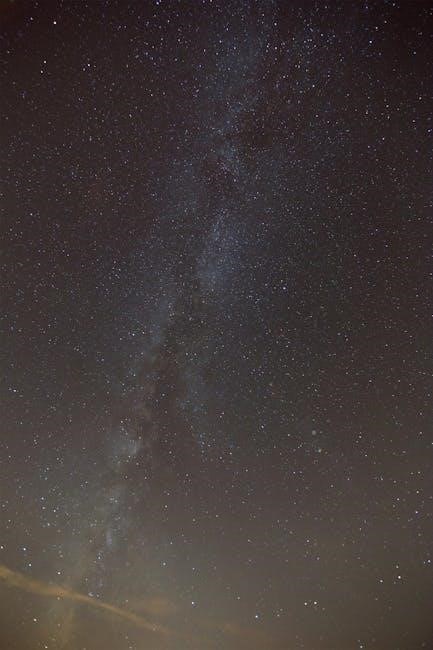
Galaxies are colossal systems, gravitationally bound collections of stars, gas, dust, and dark matter. They represent the largest structures in the universe, often spanning hundreds of thousands of light-years. Our own galaxy, the Milky Way, is a spiral galaxy, characterized by its rotating disk, central bulge, and spiral arms.
Galaxies come in various shapes and sizes. Spiral galaxies, like the Milky Way and Andromeda, feature prominent spiral arms where star formation actively occurs. Elliptical galaxies are smoother, more rounded, and generally contain older stars. Irregular galaxies lack a defined shape and often result from galactic interactions.
Galaxies aren’t isolated; they frequently interact and even collide. These interactions can trigger bursts of star formation and reshape the galaxies involved. Groups and clusters of galaxies are common, and these clusters themselves are organized into even larger structures called superclusters. Understanding galaxies is crucial to understanding the universe’s large-scale structure and evolution.
The Universe: Expansion and Fate
The universe is not static; it’s expanding, a discovery made by Edwin Hubble in the 1920s. This expansion means galaxies are moving away from each other, and the farther they are, the faster they recede. This is described by Hubble’s Law and is a cornerstone of modern cosmology.
The expansion is driven by a mysterious force called dark energy, which makes up about 68% of the universe’s total energy density. The fate of the universe depends on the amount of dark energy and matter it contains. Current observations suggest the expansion will continue indefinitely, leading to a “Big Freeze” – a cold, dark, and empty universe.
Alternative scenarios include a “Big Crunch,” where gravity eventually halts the expansion and causes the universe to collapse, or a “Big Rip,” where dark energy becomes so dominant that it tears apart all matter. Studying the universe’s expansion and composition is key to unraveling its ultimate destiny.