GLA:D Program Exercises PDF: A Comprehensive Overview
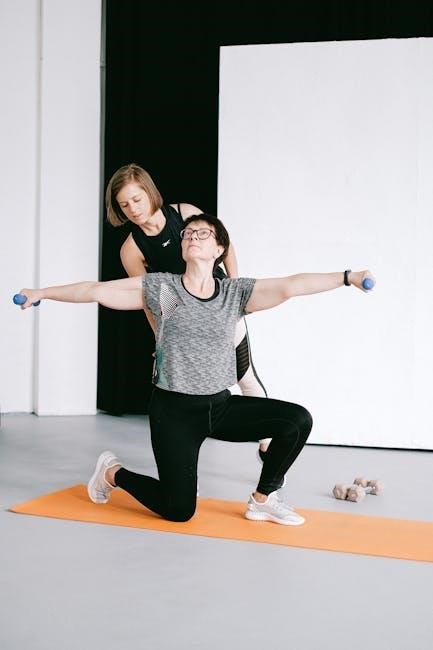
GLA:D program exercises are readily available as a PDF‚ offering structured routines with detailed instructions and visual aids for exercises like lunges and pelvic tilts.
What is the GLA:D Program?
GLA:D‚ which stands for Good Life with Arthritis: Denmark‚ is an innovative and comprehensive program meticulously designed for individuals grappling with hip and/or knee osteoarthritis. It’s more than just an exercise regimen; it’s a holistic approach combining education and tailored neuromuscular exercise therapy. The program’s core aim is to empower participants to manage their condition effectively and enhance their quality of life.
Delivered through 12 supervised sessions led by trained clinicians‚ GLA:D focuses on strengthening muscles‚ improving joint control‚ and fostering stability. Crucially‚ the program isn’t a one-size-fits-all solution; exercises are individualized to meet each person’s specific needs and capabilities. Participants also benefit from two dedicated education sessions‚ providing valuable insights into osteoarthritis and self-management strategies. The accessibility of the program is further enhanced through downloadable PDF exercise guides.
The Origins of GLA:D (Good Life with Arthritis: Denmark)
GLA:D originated from groundbreaking research conducted in Denmark‚ spearheaded by dedicated researchers seeking effective interventions for osteoarthritis. Recognizing the limitations of traditional approaches‚ they developed a program centered around neuromuscular exercises – movements designed to retrain the brain and muscles to work in harmony‚ improving joint stability and reducing pain.
The initial success in Denmark prompted international expansion‚ bringing the benefits of GLA:D to numerous countries. The program’s foundation lies in evidence-based practice‚ continually refined through ongoing research and clinical experience. The readily available PDF exercise resources are a direct result of this commitment to accessibility and standardized delivery. The goal was to create a program that wasn’t just about alleviating symptoms‚ but about empowering individuals to live a fuller‚ more active life despite their arthritis.
Core Components of the GLA:D Program
The GLA:D program’s core revolves around a blend of education and supervised exercise‚ delivered over twelve sessions. Crucially‚ the exercise component is structured around four distinct stations: leg strength‚ core stability‚ functional movement‚ and positional control. Each station features a minimum of two exercises‚ ensuring a comprehensive approach to neuromuscular retraining.

Participants benefit from individualized exercise plans‚ tailored to their specific needs and pain levels‚ guided by certified clinicians. The PDF resources supplement these sessions‚ providing a convenient way to reinforce learning and continue exercises at home. Education sessions empower individuals with knowledge about osteoarthritis‚ pain management strategies‚ and self-management techniques. This holistic approach‚ combining physical activity with education‚ is central to the program’s effectiveness and long-term success.

Understanding the GLA:D Exercise PDF
GLA:D’s PDF provides downloadable‚ structured exercise routines‚ complete with detailed instructions and visual guides for exercises like sit-ups and lunges.
Accessibility and Format of the PDF
The GLA:D program exercises are conveniently accessible in a PDF format‚ designed for easy download and use by participants. This digital format ensures widespread availability‚ allowing individuals to readily access the structured exercise routines from various devices. The PDF is specifically created to be user-friendly‚ incorporating detailed instructions alongside helpful visual guides.

These visual aids are crucial for understanding the correct form and technique for each exercise‚ minimizing the risk of injury and maximizing effectiveness. The document also includes comprehensive progression plans‚ outlining how to gradually increase the intensity and complexity of the exercises over time. It’s intended for use within GLA:D programs supervised by certified clinicians‚ though personal copies are permitted. The PDF’s layout is organized to clearly delineate the four exercise stations – leg strength‚ core strength‚ functional‚ and positional – facilitating a systematic approach to neuromuscular training.
Key Information Included in the GLA:D PDF
The GLA:D exercise PDF comprehensively details a circuit program built around four core exercise stations: core stability/postural function‚ postural orientation‚ lower extremity muscle strength‚ and functional exercises. Each station contains a minimum of two exercises‚ emphasizing the importance of addressing all four areas for optimal results.
Detailed instructions are provided for exercises like pelvic tilts‚ sit-ups‚ and lunges‚ ensuring participants understand proper form. The PDF outlines a progression plan‚ advising individuals to start with one set and gradually increase repetitions based on their tolerance and pain levels. It stresses the importance of neuromuscular exercises‚ focusing on enhancing joint control and stability. Crucially‚ the document clarifies that it’s intended for use under the guidance of certified clinicians‚ and unauthorized use requires permission. The PDF serves as a vital tool for consistent‚ supervised exercise delivery within the GLA:D program.
Importance of Supervised Clinical Guidance
The GLA:D program’s PDF exercise guide is explicitly designed for use in conjunction with supervised clinical guidance. While the PDF provides detailed instructions‚ it’s not intended for self-directed exercise‚ particularly for individuals with hip or knee osteoarthritis. Certified clinicians ensure correct form‚ minimizing the risk of injury and maximizing exercise effectiveness.
Supervision allows for individualized program adjustments based on each participant’s specific needs and pain levels. The PDF itself states that printing or copying is solely for use within supervised GLA:D programs‚ highlighting this critical aspect. Clinicians deliver twelve sessions of individualized neuromuscular exercise therapy‚ building upon the foundational knowledge gained during the two education sessions. This structured approach‚ guided by a trained professional‚ is fundamental to the program’s success and ensures participants safely progress towards improved function and quality of life.
The Four Exercise Stations
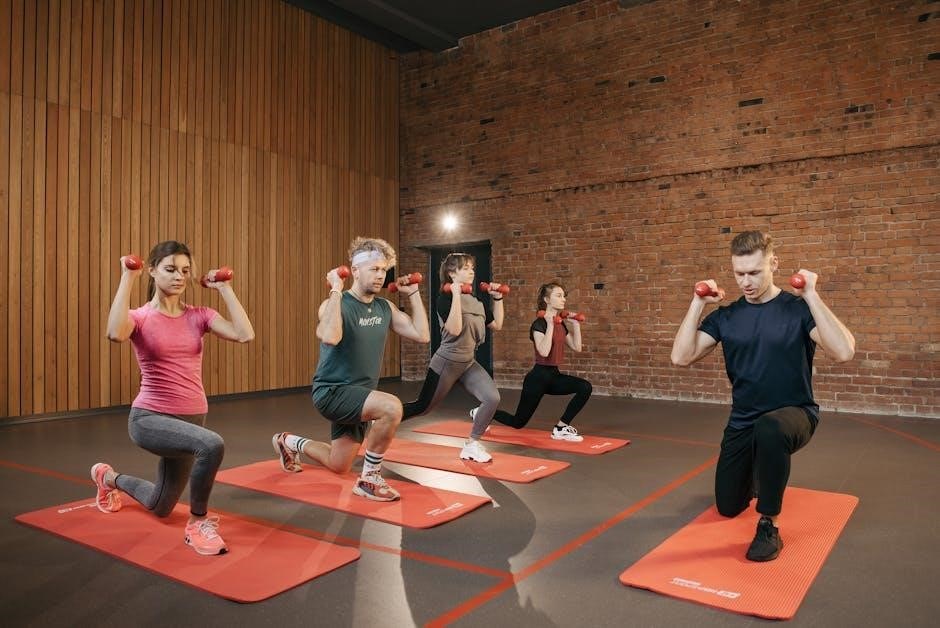
GLA:D’s neuromuscular exercises are divided into four key stations: leg strength‚ core strength‚ functional movements‚ and positional control‚ each with a minimum of two exercises.
Leg Strength Exercises
Leg strength exercises within the GLA:D program are fundamental for improving lower extremity muscle power and endurance‚ crucial for individuals experiencing hip and/or knee osteoarthritis. These exercises directly address muscle weakness‚ a common factor contributing to joint pain and functional limitations.
The PDF resource details specific exercises designed to target key muscle groups‚ including the quadriceps‚ hamstrings‚ and gluteal muscles. Examples often include variations of squats‚ lunges‚ and leg presses‚ adapted to individual fitness levels and pain tolerance. A core focus is on controlled movements‚ emphasizing proper form over the amount of weight or resistance used.
Participants are guided to perform these exercises with attention to neuromuscular control‚ ensuring that the muscles are actively stabilizing the joint throughout the range of motion. The goal isn’t simply to build bulk‚ but to enhance the ability of the leg muscles to support and protect the affected joint‚ ultimately improving function and reducing pain.
Core Strength Exercises
Core strength exercises are a vital component of the GLA:D program‚ focusing on strengthening the muscles of the abdomen‚ back‚ and pelvis. A strong core provides essential stability and support for the entire body‚ particularly the lower limbs‚ impacting balance and reducing stress on the hips and knees.
The PDF guide outlines exercises like pelvic tilts‚ abdominal bracing‚ and controlled trunk rotations. These are designed to improve postural control and enhance the ability to maintain proper alignment during movement. Emphasis is placed on engaging the deep core muscles‚ rather than relying on superficial muscle contractions.
These exercises are progressively challenging‚ starting with simple movements and gradually increasing in complexity. The aim is to build endurance and strength in the core muscles‚ enabling individuals to perform daily activities with greater ease and reduced risk of injury. Proper form is paramount to avoid strain and maximize effectiveness.
Functional Exercises
Functional exercises within the GLA:D program are specifically designed to mimic real-life movements‚ bridging the gap between the clinic and everyday activities. The PDF resource details exercises that simulate tasks like stair climbing‚ squatting‚ and walking‚ all crucial for maintaining independence and quality of life.
These exercises aren’t about isolating muscles; they focus on coordinated movement patterns. They challenge the neuromuscular system to work efficiently‚ improving balance‚ coordination‚ and overall functional capacity. The goal is to retrain the body to move correctly and safely‚ reducing the risk of falls and injuries.
Progression involves increasing the complexity of the movements‚ adding resistance‚ or altering the surface. Participants are encouraged to focus on maintaining proper form throughout each exercise‚ ensuring they are effectively targeting the intended muscle groups and movement patterns. This station is key to translating strength gains into practical benefits.
Positional Exercises
Positional exercises‚ detailed within the GLA:D program PDF‚ concentrate on enhancing joint awareness – proprioception – and improving control in various positions. These aren’t about building strength directly‚ but rather about refining the body’s ability to sense its location and maintain stability.
Exercises often involve controlled movements while balancing or shifting weight‚ challenging the neuromuscular system to react and stabilize the joint. This station aims to improve the body’s automatic responses to unexpected movements‚ reducing the risk of injury during daily activities.
The PDF provides clear instructions on how to perform these exercises safely and effectively‚ emphasizing the importance of slow‚ controlled movements and maintaining proper alignment. Progression involves increasing the difficulty of the positions or adding external perturbations. Mastering these exercises builds a foundation for more complex movements.

Exercise Progression and Repetition
GLA:D encourages starting with one exercise set and gradually increasing repetitions based on individual tolerance‚ prioritizing listening to your body and managing pain levels.
Starting with One Set and Gradually Increasing
GLA:D’s exercise approach emphasizes a cautious and progressive methodology‚ particularly beneficial for individuals experiencing discomfort or those new to exercise. Participants are initially advised to begin with just one set of each exercise within the four stations – leg strength‚ core strength‚ functional movement‚ and positional control.
This initial phase focuses on establishing proper form and assessing individual tolerance levels. The program strongly advocates for listening attentively to the body’s signals; if pain arises‚ maintaining or even reducing the intensity is crucial.
As strength and confidence improve‚ and importantly‚ without exacerbating pain‚ participants can gradually increase the number of sets performed. This progression is individualized‚ allowing each person to advance at their own pace. The goal isn’t rapid advancement‚ but rather consistent‚ sustainable improvement in neuromuscular function and overall well-being.
Listening to Your Body and Pain Levels
A cornerstone of the GLA:D program is prioritizing individual responses to exercise‚ specifically regarding pain. The PDF materials and clinical guidance consistently emphasize the importance of attentive self-monitoring during each exercise session. Participants are encouraged to perceive pain not as a barrier to stop entirely‚ but as a signal to modify their approach.
If discomfort arises‚ reducing the range of motion‚ slowing down the movement‚ or even temporarily pausing the exercise is recommended. Starting with just one set‚ as suggested‚ is particularly helpful for those sensitive to pain. The program aims to build confidence and control‚ not to push through significant discomfort.
Understanding the difference between expected muscle soreness and pain indicative of joint irritation is vital. GLA:D promotes a mindful approach‚ empowering individuals to adjust their exercise intensity based on their unique experience.

Neuromuscular Exercises: The Focus of GLA:D
GLA:D’s neuromuscular exercises‚ detailed in the PDF‚ prioritize joint control and stability through four stations: leg strength‚ core‚ functional‚ and positional movements.
Joint Control and Stability
GLA:D program exercises‚ as outlined in the downloadable PDF‚ heavily emphasize neuromuscular training to enhance joint control and stability – crucial for individuals experiencing hip and/or knee osteoarthritis. This isn’t simply about building muscle strength; it’s about retraining the nervous system to optimally coordinate muscle activation around the affected joints.
The four exercise stations – leg strength‚ core strength‚ functional exercises‚ and positional exercises – are all designed to contribute to this goal. Each station incorporates movements that challenge the body’s ability to maintain proper alignment and control during dynamic activities. The PDF provides guidance on performing these exercises correctly‚ focusing on mindful movement and proper form;
By improving joint control‚ participants can reduce pain‚ improve function‚ and prevent further joint degeneration. The program aims to restore a sense of proprioception – the body’s awareness of its position in space – which is often impaired in individuals with osteoarthritis. Consistent practice of these neuromuscular exercises‚ guided by the PDF and a certified clinician‚ is key to achieving lasting benefits.
Importance of All Four Stations
The GLA:D program‚ detailed within its accessible PDF guide‚ strategically divides neuromuscular exercises into four distinct stations: leg strength‚ core strength‚ functional movements‚ and positional control. Completing all four is not merely recommended – it’s fundamental to the program’s effectiveness.
Each station addresses a unique component of joint health and stability. Neglecting even one station can compromise overall results. Leg strength builds the foundational power‚ while core strength provides the necessary trunk stability for efficient movement. Functional exercises bridge the gap between isolated strength and real-life activities‚ and positional exercises refine joint awareness and control.
The PDF emphasizes that a minimum of two exercises should be performed at each station. This holistic approach ensures a comprehensive retraining of the neuromuscular system‚ leading to improved joint function‚ reduced pain‚ and enhanced quality of life. Skipping stations limits the program’s ability to address the multifaceted nature of osteoarthritis.

Additional Support and Resources
GLA:D participants can benefit from occupational therapy for hand exercises‚ pain management advice tailored for work‚ and access to helpful assistive devices.
Role of Occupational Therapy
Occupational therapy plays a crucial supportive role within the GLA:D program‚ extending beyond the core exercise components to address functional limitations impacting daily life. A qualified occupational therapist can conduct a thorough assessment of an individual’s specific needs and challenges‚ identifying areas where modifications or adaptive strategies can enhance participation in meaningful activities.
Specifically‚ an occupational therapist can design a personalized hand exercise program to address any hand-related pain or weakness that may be present‚ or develop as a result of altered movement patterns. They can also provide guidance on ergonomic principles and workplace adjustments to minimize strain and discomfort during work-related tasks. This includes advice on posture‚ lifting techniques‚ and workstation setup.
Furthermore‚ occupational therapists are skilled in recommending and training individuals on the use of appropriate aids and assistive devices‚ such as braces‚ splints‚ or modified tools‚ to support joint protection and improve functional independence. Their holistic approach ensures that participants receive comprehensive support to optimize their quality of life alongside the exercise program.
Pain Management Advice for Work
GLA:D recognizes the significant impact work can have on individuals experiencing hip or knee pain‚ and provides valuable pain management advice tailored to the workplace. Understanding how to manage discomfort during work is a key component of sustained improvement. Participants can receive personalized guidance on strategies to alleviate pain and prevent exacerbation of symptoms while performing job-related tasks.
This advice often includes ergonomic assessments of the work environment‚ focusing on posture‚ workstation setup‚ and movement patterns. Recommendations may involve modifying tasks‚ taking frequent breaks‚ or utilizing assistive devices to reduce strain on affected joints. Learning proper lifting techniques and avoiding prolonged static positions are also emphasized.
The program aims to empower individuals to proactively manage their pain at work‚ fostering a return to functional capacity and promoting long-term employment. This support‚ combined with the exercise program‚ helps participants regain confidence and participate more fully in their professional lives.
Aids and Assistive Devices
GLA:D acknowledges that utilizing aids and assistive devices can significantly enhance independence and reduce pain for individuals with hip or knee osteoarthritis. An occupational therapist plays a crucial role in assessing individual needs and recommending appropriate devices to support daily activities and participation in the exercise program.
These devices can range from simple tools like reachers and grabbers to more specialized equipment such as walking sticks‚ braces‚ or shoe inserts. The selection process considers the specific challenges faced by each participant‚ aiming to minimize joint stress and improve functional mobility.
Proper training on the safe and effective use of these aids is essential. Occupational therapists provide guidance on correct fitting‚ maintenance‚ and integration into daily routines. By leveraging assistive technology‚ individuals can actively manage their condition‚ maintain their quality of life‚ and continue progressing through the GLA:D program.

GLA:D Program Funding and Access
GLA:D programs are often publicly funded‚ increasing accessibility for patients; email sign-up provides updates on new articles and program availability.
Publicly Funded Programs
GLA:D’s accessibility is significantly enhanced through publicly funded programs‚ aiming to reach a broader patient base needing support for hip and knee osteoarthritis. These initiatives demonstrate a commitment to providing evidence-based care without substantial financial barriers; The program’s structure‚ detailed within the downloadable PDF exercise guides‚ allows for efficient implementation within these funded frameworks.
These programs often cover the cost of the initial education sessions and the twelve supervised exercise therapy sessions delivered by trained clinicians. This financial assistance is crucial‚ as the GLA:D program isn’t simply about exercises; it’s a holistic approach encompassing education and individualized neuromuscular training. The PDF serves as a valuable resource‚ reinforcing the learned techniques and enabling continued practice beyond the supervised sessions. Accessing information about these publicly funded opportunities often involves contacting local healthcare providers or searching for GLA:D-certified clinics within your region.